

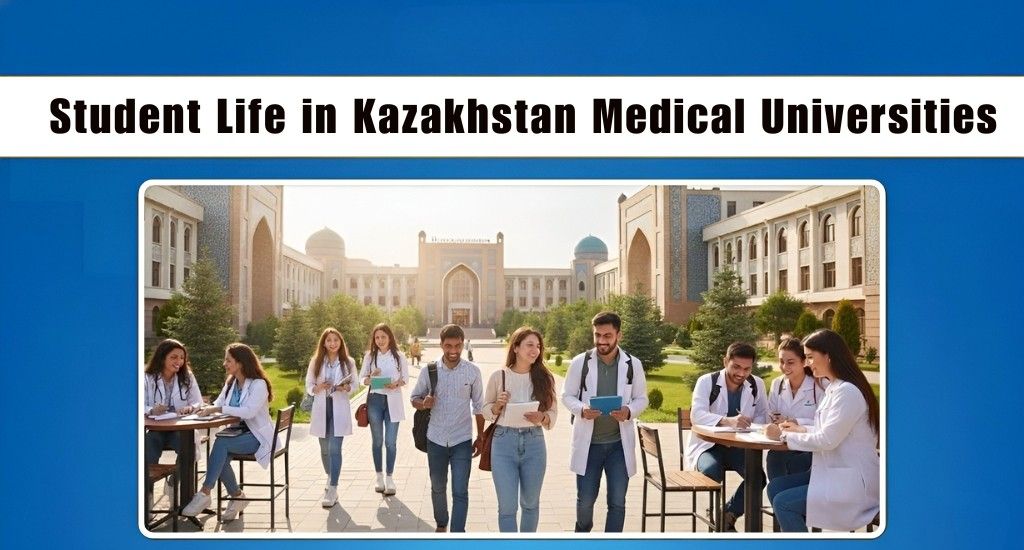

Enrolling in a medicine course in Kazakhstan has evolved from being a “budget alternative” to a “top destination” choice for foreign students seeking medicine courses, particularly as we approach 2026. For foreign students, and Indians in particular, choosing to enroll in an MBBS or an MD program in this country is no longer merely dependent on the costs—it’s all about the kind of life that is offered—a mix of tough European education with a diverse experience. With affordable tuition fees and NMC-approved English-medium programs, student life in Kazakhstan medical universities for Indian students 2026 is characterized by a vibrant multicultural environment, comfortable Indian mess facilities, and a strong focus on clinical training to prepare for the NExT exam.
The following is an in-depth discussion on what it is really like to be a medical student in Kazakhstan.
The Academic Setting: Difficult but Rewarding
It has been noticed that the international curricula for various medical universities in Kazakhstan, including Astana Medical University and Asfendiyarov Kazakh National Medical University, tend towards convergence with the curricula found in other universities in the country. To make applicants eligible for different medical councils, for instance, in India, the NMC or in the United States, the ECFMG, an internship course of six years, which consists of five years of instruction, with an internship undertaken for one year, is the norm in 2026.
English is the medium of teaching for international students, thus eliminating any obstacles to learning. However, the first two years are quite challenging. You spend the whole day doing anatomy, histology, and biochemistry lab work. After three years of intensive study, you then get involved in clinical rotations.
Clinical Exposure
One of the best moments in a student’s life is early clinical exposure. In contrast to many countries, Kazakh universities use a wide network of affiliated government hospitals to ensure their students see patients early and often during their degree. Rotation among the departments of Internal Medicine, Surgery, and Pediatrics is common for the students in order for them to get practical experience in the clinical management of patients.
Living Arrangements: Experiences in a Hostel
The university hostel is generally the center of the universe for most international students. They are usually located within the campus or just outside the campus, and thus, a slight distance from the early morning lectures.
- Room Arrangement: The majority of the rooms are shared by 2 to 4 students, comprising all the basic furnishings, such as beds, study tables, and wardrobes.
- Safety First: Security is the number one concern. The hostels are provided with 24/7 security cameras, biometric entry systems, and night wardens for foreign wings.
- Facilities: The modern hostel would include common kitchen areas (which can be used for those who would like to cook), laundry areas, and high-speed wireless Internet access, which is necessary for access to online medical libraries.
Culinary Comforts: A Taste of Home
Food is one of the biggest concerns that students experience when they relocate to a foreign country. The good news is that Kazakhstan has adapted incredibly to the huge influx of international students.
Most medical universities in cities like Almaty and Astana now offer specialized Indian Messes. These facilities serve traditional vegetarian and non-vegetarian meals, ensuring that students don’t have to worry about cooking during their busy exam cycles. For those who prefer to explore, Kazakh cuisine itself is a hearty mix of meat and dough (like the famous Beshbarmak), but international fast food and diverse restaurants are available in every major city.
Cost of Living: Budgeting in 2026
Kazakhstan is one of the cheapest countries to pursue a medical education. As of 2026, the average monthly cost of living for a student studying there would be between 150 and 250 U.S. dollars.
Public transportation is very organized and inexpensive. For instance, the “Onay” card systems used in Almaty or the application used in Astana allow students to ride across the city for less than $0.20.
Extracurricular Life & Culture
Life at medical school is not just about books and medical equipment either. Kazakh institutes of higher education foster an active social life.
- Cultural Festivals: Both local festivals (like Nauryz) and international festivals are observed by universities. One commonly comes across massive Diwali or Eid celebrations organized by the student wing of the college or university, with the entire university joining in on the festivities to enjoy music and dance.
- Sports: Most of the campuses contain sports complexes for the likes of football, basketball, and even wrestling, which is a favorite sport of the people of Kazakhstan.
The Climate Challenge
But if there is one thing that all students must be prepared for, it is the winter that Kazakhstan experiences. In a city such as Astana, the temperature can drop to -30 degrees Celsius. However, the infrastructure that the country has is suited to the cold climate. The central heating is strong, so if you have a good coat and boots, the winter wonderland becomes a fun place for skiing and ice skating. The summer is warm, which is suitable for hiking in the Trans-Ili Alatau Mountains.
Being a student in Kazakhstan is a metamorphosis in itself. It takes a certain level of commitment to go through the tough pre-med course, but in return, you will gather life-long international ties, a different cultural outlook, and, of course, a world-class education. Being a part of the class of 2026, Kazakhstan is more than a country to go to school in, more a place to become a strong and internationally-minded doctor.
EOCL India
EOCL India – Education Orbit Counseling & Link is an educational consultancy for MBBS admission abroad with international exposure. The Delhi-based institute advises Indian students to join NMC recognized universities in Russia, Kazakhstan, and Georgia. They also help students with all the necessary procedures to make their medical profession affordable across the globe. Contact them now.