


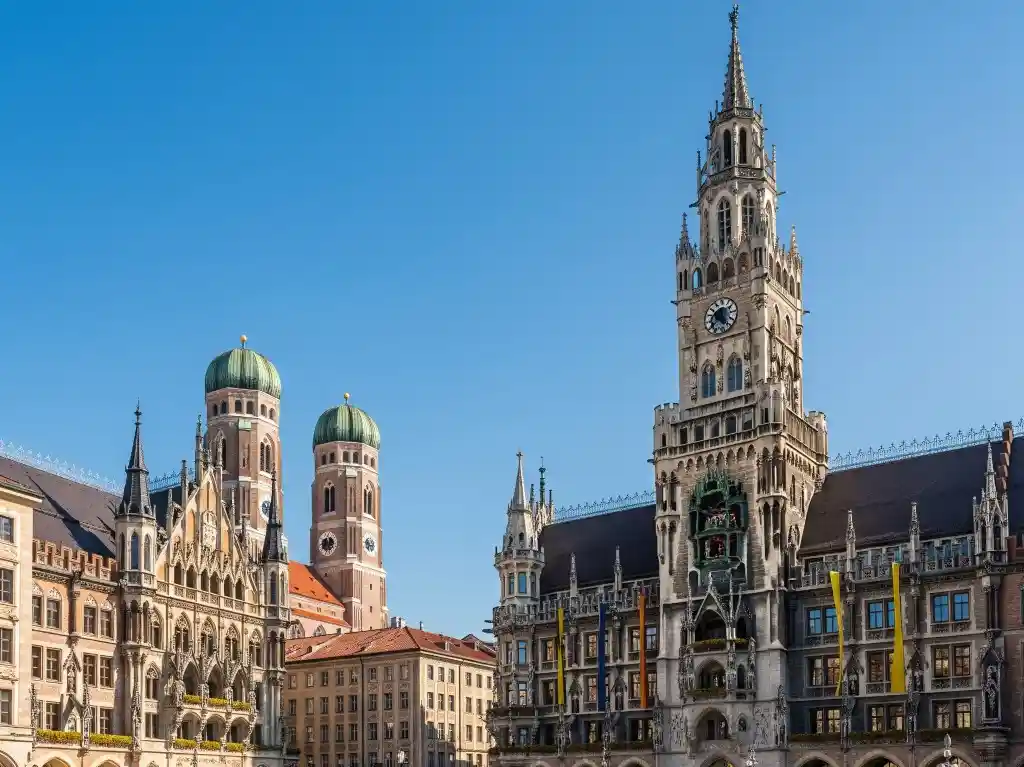

Why Choose German Medical Universities?
Excellent medical education in Germany is offered at no cost at public universities, with semester fees ranging from €150 to €400. The MBBS program offers preclinical years that are supported by English, clinical training that requires German, and degrees that are accepted globally. Leading teaching hospitals will provide you with early, hands-on clinical experience, and Germany’s international cities are welcoming and secure. Admissions are quite difficult, despite a 5% non-EU quota; nonetheless, Indian candidates with excellent academic records, NEET, and strong German competence (C1/C2) can secure slots. Other benefits include the opportunity to work part-time (around 20 hours per week) and the availability of scholarships such as the Deutschlandstipendium and DAAD.
Top Medical Universities in Germany for Indian Students
1. Charite – Universitatsmedizin Berlin
- Established: 1710 (merged 2003)
- Type: Public
- Medium: German \ English
Reputable for its cutting-edge medical research and patient care, Charite is one of Europe’s largest and most prestigious university hospitals. This international university, which is conveniently located in the heart of Berlin, offers a wide range of programs and research opportunities in English. Because of its international recognition and collaborative medical education that blends clinical experience and innovation, Charite is a popular choice for Indian students.
2. Ludwig Maximilian University of Munich
- Established: 1472
- Type: Public University
- Medium: German (with some English‑supported lectures)
LMU Munich is a prestigious university that provides excellent medical research and education. In addition to sophisticated facilities and access to cutting-edge healthcare systems, it offers students a solid academic basis. Munich’s lively student community and high standard of living make it an attractive destination for Indian medical students.
3. Heidelberg University
- Established: 1386
- Type: Public
- Medium: German (with intensive preparation)
The medical faculty at Heidelberg University, the oldest in Germany, is widely recognized as one of the best in Europe. The university prioritizes multidisciplinary education and biomedical research. International exchange programs, good academic assistance, and connections to top hospitals and research organizations are all advantageous to Indian students.
4. Technical University of Munich
- Established: 1868
- Type: Public
- Medium: German (C1 required; English in preclinical modules)
Medical engineering advancements and technologically sophisticated healthcare are hallmarks of TUM’s School of Medicine. TUM offers prospective physicians and medical scientists a vibrant environment with an emphasis on interdisciplinary studies and research excellence. Its English-taught modules and excellent employability prospects in the EU and beyond are particularly valued by Indian students.
5. Goethe University Frankfurt
- Established: 1914
- Type: Public
- Medium: German
With access to some of the greatest medical facilities in the area, Goethe University, which is situated in Germany’s financial center, provides a comprehensive medical education. The university places a strong emphasis on early patient engagement and hands-on clinical instruction. Its cosmopolitan environment, rigorous academic program, and chances for international exposure draw in Indian students.
6. University of Hamburg
- Established: 1919
- Type: Public
- Medium: German
At the University of Hamburg, the Faculty of Medicine is renowned for its work in infectious biology, oncology, and neurology. The theoretical and clinical learning are well-balanced. Indian students appreciate Hamburg’s cosmopolitan atmosphere and worldwide research partnerships, which facilitate their adjustment to German life.
7. University of Freiburg
- Established: 1457
- Type: Public
- Medium: German
The University of Freiburg blends modern medical education with history in a picturesque area of southern Germany. At its university hospital, it provides robust clinical training and activities that are driven by research. Its emphasis on global health, sustainable principles, and encouraging academic atmosphere attract Indian students.
8. RWTH Aachen University
- Established: 1870
- Type: Public
- Medium: German
The highly regarded medical faculty at RWTH Aachen, which focuses on technology integration in medicine, is a center for engineering and applied sciences. Its multidisciplinary research and problem-based learning methodology draw in Indian students seeking a cutting-edge, contemporary medical education.
9. University of Tubingen
- Established: 1477
- Type: Public
- Medium: German
As a leader in neuroscience and personalized medicine, the University of Tubingen has a strong academic reputation and state-of-the-art research facilities. The medical faculty participates in multiple worldwide networks and offers English support services. Its student-friendly city and robust mentorship programs are advantageous to Indian students.
10. Hannover Medical School
- Established: 1965
- Type: Public
- Medium: German
MHH is one of the best universities in Germany that focuses only on medical research and education. Its immunology, genetics, and transplantation programs are especially well-known. MHH’s focused approach, robust English-language research programs, and practical clinical experience appeal to Indian students.
MBBS Course Structure and Duration in Germany
Humanmedizin, the German term for medical education, is a rigorous and regulated program that normally lasts six years and three months. Comprehensive academic study, clinical training, and a required practical year are all included in this time frame. The curriculum, which is mostly taught in German, combines in-depth theoretical understanding with a great deal of practical clinical experience. Internationally recognized medical degrees from Germany equip students to take foreign licensing tests including the USMLE, PLAB, FMGE, and the soon-to-be NExT in India.
Phase Preclinical (Years 1–3)
The preclinical phase, which prepares students for their transition into clinical medicine, takes up the first two years of medical school in Germany. The fundamental medical sciences, which serve as the foundational information needed for future clinical practice, are taught to students during this time. This phase’s courses place equal emphasis on theoretical knowledge and useful laboratory skills. In addition to studying subjects like anatomy, physiology, biochemistry, and medical ethics, students also start to hone their clinical reasoning and patient-interaction abilities.
During the preclinical stage, the following subjects are frequently taught:
- Human Anatomy
- Physiology
- Biochemistry
- Histology
- Medical Terminology
- Introduction to Medical Ethics
- Foundations of Clinical Communication
Dissections, simulation training, laboratory work, and fundamental patient communication exercises are all included in this phase. Students are required to pass the First Medical Examination at the conclusion of their second year.
Clinical Phase (Years 4-6)
Clinical training is the main focus of years three through five, during which time students cycle across different departments and focus on diagnosing, treating, and understanding diseases. This stage includes bedside instruction, hospital visits, lectures, and seminars. In fields including internal medicine, surgery, pediatrics, psychiatry, obstetrics, and more, students take part in supervised clinical rounds. Students will be exposed to real-world medical situations and learn how to handle patients under expert supervision thanks to this curriculum component.
- Internal Health
- Operation
- Young children
- Pregnancy and Gynecology
- Mental health
- Emergency Care
- Family Health
- Both epidemiology and public health
Clinical internships are full-time throughout the sixth year, sometimes known as the practical year. Internal medicine, surgery, and a third specialty of choice are typically the three main specializations that students rotate through while working in teaching hospitals. Students are supposed to perform duties under supervision throughout this year, much like junior doctors. In order to prepare students for independent clinical work, the emphasis is on incorporating all theoretical knowledge into real-world medical practice.
MBBS in Germany: Fee Structure
Here is the Germany universities fee structure details are below:
| University Name | City | Non‑EU Tuition (€) | Estimated Living (£/yr) |
|---|---|---|---|
| Charité – Universitatsmedizin | Berlin | - | €11,000–14,400 |
| LMU Munich | Munich | - | €10,800–15,600 |
| Technical University of Munich | Munich | - | €10,000–12,000 |
| Heidelberg University | Heidelberg | - | €12,000–18,000 |
| Goethe University Frankfurt | Frankfurt | - | €12,000 |
| University of Hamburg | Hamburg | - | €12,000 |
| University of Freiburg | Freiburg | - | €10,800 |
| RWTH Aachen University | Aachen | - | €10,800–14,400 |
| University of Tübingen | Tübingen | - | €10,800–12,000 |
| Hannover Medical School | Hannover | - | €10,800 |
NOTE: Tuition Fee – Most German public universities don’t charge EU/non‑EU tuition, universities only charge a modest semester contribution like (€85–350).
Advantages of study in Germany
Germany provides a special combination of excellent instruction, cheap or free tuition, and a lively international community for students. Germany is an inexpensive option when compared to nations like the US or the UK because the majority of its public universities, especially for international students, charge little to no tuition. The educational system places a strong emphasis on practical skills, research, and innovation, especially in disciplines like engineering, medicine, and the natural sciences. Particularly at the postgraduate level, numerous programs are provided in English, and German degrees are recognized around the world. Excellent infrastructure, up-to-date facilities, and chances for internships and part-time employment are all advantageous to students.