


KGMU Rankings and Recognition
King George’s Medical University Rankings are of great significance to potential students and their families when assessing medical facilities. King George Medical University remains in the top tier of all government medical schools in India across many different indices of ranking.
- King George’s Medical University Ranking in the top 20 or 30 in India in the National Institutional Ranking Framework for academic quality, output, graduation success, and outreach programs.
- KGMU is consistently rated as one of the higher-level government medical schools in India by India Today due to the quality of faculty, facilities, and patient care.
- According to Outlook India Medical College rankings, KGMU is regularly in the top tier when assessed for the overall quality of its medical education programs and clinical training experiences.
- Globally Recognized: Most of King George Medical University’s degrees are internationally recognized by organizations such as the WHO, making it possible for graduates to practice medicine worldwide upon passing licensing requirements.
These rankings for King George Medical University demonstrate its ongoing commitment to providing quality education, research, and patient care, the three primary components of any quality-based medical institution.
Campus
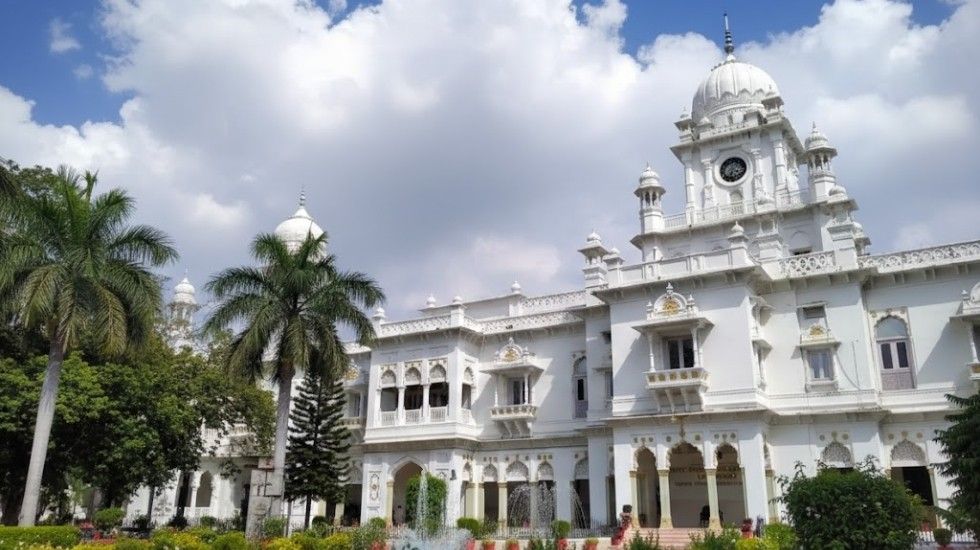
The campus of King George’s Medical University (KGMU) in Lucknow serves as a historical representation of medical education in India throughout its 200+ years of existence. The buildings were designed to create an ideal environment for learning, which still exists today. The campus exhibits both heritage and modern-day facilities and buildings, including.
- Heritage
The original buildings built during the colonial period are still standing. There are several red brick buildings built using Victorian-style architecture that have high ceilings to promote ventilation during the hot summers in Lucknow, large covered porches, highly ornate architecture, etc. The majority of these buildings currently contain administrative offices and many academic departments. As such, they are a strong visual representation of the century-long journey of this institution.
- Modernism
There are currently many modern buildings that contain many of the latest medical facilities. Over the last several decades, KGMU has developed its infrastructure significantly.
- Medical Equipment
KGMU’s hospitals have the latest technologies for diagnosing patients, such as CT scanners (computerized tomography), MRI machines (magnetic resonance imaging), advanced laboratory analyzers, digital imaging systems, etc. All of this allows for complex surgical procedures to occur.
- Library and Digital Resources
KGMU has an extensive collection of medical literature available in its library, including textbooks, academic journals, research articles, and other digital databases that provide access to worldwide medical knowledge. Students at KGMU can access digital educational materials from the KGMU login portals; they will complement traditional print forms of literature that constitute the technological aspect of modern medical education.
Academic Programs and Admissions Process
KGMU (King George’s Medical University) offers students interested in a career in health care a variety of educational options at various points in their academic careers. Therefore, understanding the application process for KGMU’s coursework is key for those who want to go into health care as well.
- Undergraduate Courses
The flagship undergraduate program at KGMU is a Bachelor of Medicine and Bachelor of Surgery (MBBS). Every year, KGMU admits approximately 250 MBBS students from the NEET-UG Examination (National Eligibility cum Entrance Test–Undergraduate Examination). Potential MBBS prospective students often search for the KGMU fees schedule since it is one of the factors used to determine how they will finance their education.
KGMU Fees Schedule
KGMU is a public institution of higher learning (medical schools included), its tuition, compared to most of India’s private medical schools, is much lower than that of private institutions. KGMU has provided a general fee schedule for its MBBS program below.
- Regularized Annual Tuition Fees: Between Rs. 50,000 and Rs. 70,000 Annually (subject to review)
- Estimated Total KGMU MBBS Fees for the 5.5 Years (Either including or not including a medical internship): Between Rs. 250,000 and Rs. 400,000
- Estimated Annual Hostel Fees: Between Rs. 10,000 and Rs. 15,000
- Estimated Monthly Mess Fees: Between Rs. 3,000 and Rs. 4,000
- Estimated Caution Deposits: Between Rs. 10,000 and Rs. 15,000 (one-time, refundable)
Consequently, for all of these reasons, KGMU is an excellent option for people wishing to obtain an excellent medical education at a very reasonable cost—particularly for students from economically disadvantaged families.
Admission Process
- How to Apply to King George's Medical University
NEET-UG is required to gain admission into the MBBS program through a NEET-UG qualification. Students who are offered a position in their selected field will be given counseling through the following methods: a state-wise selection for 85 percent of the available seats (filled through state-wise selection conducted by the Directorate of Medical Education UP) and on a nationwide basis for all others (i.e., nationwide selection for 15 percent of the available seats, done through the Medical Counseling Committee).
After the students have been selected for admission, they will be required to present all necessary supporting documentation for verification within the timeframe outlined on the KGMU website. Upon verification of the document presented by each applicant, the seats will be allocated based on the preference ranking of each applicant on the NEET examination and the remaining seat availability (after applicants being chosen on the basis of national ranking).
All information regarding how to apply and when will be available on the KGMU website. Admission into the BDS Program will follow the same admission structure as the MBBS Program (i.e., through the same entrance examination), except as described herein.
KGMU Hospital: Patient Care and Clinical Training
The main strength of KGMU is in its large facilities for hospitals, where patients receive medical care and medical education occurs. Therefore, getting to know KGMU hospital’s services is advantageous for both patients who want a service and students who want to find a clinic for their training.
Patients who want to make an appointment for medical services may use www.KGMU.org’s online system. To assist the hospital with very large numbers of patients, KGMU has established an electronic appointment booking process.
- The online appointment process is
- Go to the KGMU’s main website.
- Click on KGMU’s online appointment page (www.KGMU.org).
- Select the department/specialty.
- Scroll through all available dates and times; choose one that works for you.
- Fill out the patient information and contact information sections of the form.
- Receive confirmation via SMS/email.
The electronic system helps improve service to patients by reducing wait time and being able to control the flow of patients so the hospital can provide better service. However, patients with emergency needs are treated right away and do not need to make an appointment.
KGMU Recruitment
With KGMU recruitment processes, there are more than just educational employment opportunities for medical professionals and faculty members, and administrative employees. KGMU performs regular recruitment drives for many different job titles and responsibilities.
- Faculty KGMU Recruitment
KGMU’s recruitment for teaching positions may consist of:
- Faculty, such as a professor or a senior faculty role, requires an MD/MS and years of teaching experience.
- Faculty, such as an associate professor: An intermediate faculty role, this teacher has experience in both teaching and performing research.
- Faculty, such as an assistant professor: The newest of the administrative roles, this teacher has recently graduated and gained teaching experience.
- Faculty, such as tutors/demonstrators, are responsible for teaching in pre-clinical and para-clinical (e.g., anatomy, psychology) departments or coursework.
KGMU follows open and fair processes for hiring faculty (please see the section on Recruitment Policy for more details). As such, KGMU will advertise faculty positions in the local newspaper and on its website (www.kgmu.org). KGMU’s selection process consists of document verification, a panel interview, and review of the applicant’s experience, research publications, and teaching experience.
Non-Teaching Staff Recruitment
The recruitment of non-teaching staff responsibilities at KGMU includes:
- Medical Officers: Medical doctors (MBBS) to provide direct patient care across multiple areas.
- Nursing Staff: Staff nurses, nursing supervisors, and nursing administrators.
- Pharmacists: Pharmacists within the hospital pharmacy are to provide control over the dispensing of medication and maintain the inventory of medications.
- Paramedical Staff: Laboratory technologists/technicians, radiological technologists, physiotherapy technicians, and other allied health professionals.
- Administrative Staff: Clerks, accountants, data administrators, and office assistants.
- Technical Staff: General equipment maintenance, information technology, and technical support staff.
Student Life
King George’s Medical University’s (KGMU) student life in Lucknow goes far beyond academics; it includes all of the following areas of development: cultural, social, and personal.
- The Hostels
Most of the students at KGMU live on campus in one of KGMU’s hostels. Student life within KGMU’s hostels encourages many friendship experiences, for example, late-night study sessions, shared meals, birthday parties, helping each other handle the stress of exams, and friendships made during your teens that last a lifetime.
There are three different kinds of hostel facilities available at KGMU. Some blocks were built several years ago and have basic amenities. On the other hand, newer buildings have better amenities. Mess provides basic nutritional meals for students; however, many students obtain their own food from outside or prepare their own meals.
Students who use the KGMU login portal can find information regarding hostel details, room allotment, and mess management.
- Cultural and Extracurricular Activities
Although KGMU students have demanding academic programs, they still participate in many various extracurricular activities, including
- Annual Cultural Festival: KGMU’s annual festival allows for cultural performances/competitions, music/dance drama, and so on to help students reduce academic stress.
- Sports: KGMU has an athletic program, and students participate in many inter-medical college sporting competitions; examples include cricket, football, basketball, and athletics.
- Clubs and Societies: There are many different types of clubs and societies at KGMU (literary society, quiz club, photography club, social service) that allow students to pursue their dreams outside of being a doctor.
Student Life
King George’s Medical University’s (KGMU) student life in Lucknow goes far beyond academics; it includes all of the following areas of development: cultural, social, and personal.
- The Hostels
Most of the students at KGMU live on campus in one of KGMU’s hostels. Student life within KGMU’s hostels encourages many friendship experiences, for example, late-night study sessions, shared meals, birthday parties, helping each other handle the stress of exams, and friendships made during your teens that last a lifetime.
There are three different kinds of hostel facilities available at KGMU. Some blocks were built several years ago and have basic amenities. On the other hand, newer buildings have better amenities. Mess provides basic nutritional meals for students; however, many students obtain their own food from outside or prepare their own meals.
Students who use the KGMU login portal can find information regarding hostel details, room allotment, and mess management.
- Cultural and Extracurricular Activities
Although KGMU students have demanding academic programs, they still participate in many various extracurricular activities, including
- Annual Cultural Festival: KGMU’s annual festival allows for cultural performances/competitions, music/dance drama, and so on to help students reduce academic stress.
- Sports: KGMU has an athletic program, and students participate in many inter-medical college sporting competitions; examples include cricket, football, basketball, and athletics.
- Clubs and Societies: There are many different types of clubs and societies at KGMU (literary society, quiz club, photography club, social service) that allow students to pursue their dreams outside of being a doctor.
Accessing KGMU
This information has been compiled to assist anyone interested in obtaining information about King George Medical University (KGMU).
- Prospective Students
Investigate KGMU admissions processes and requirements, as well as KGMU fees for a 5-year MBBS program. Look for application deadlines through KGMU’s website or from authorized counseling agencies.
- Current Students
Use your KGMU login credentials to log onto the KGMU academic service area and check examination results on the KGMU result page (www.kgmu.org) and stay current with KGMU announcements.
- Researchers and Faculty
Review opportunities for collaboration, explore KGMU’s research facilities, or contribute to KGMU’s academic mission.
EOCL India
EOCL India is dedicated to fulfilling the dreams of all those students who, for whatever reason, could not get a government MBBS seat in India. We provide complete help and guidance in finding the best MBBS universities globally and getting them admission. And if students prefer to study in India, EOCL India also provides complete support for them.
Contact our team for any subject you need expert guidance and assistance.