

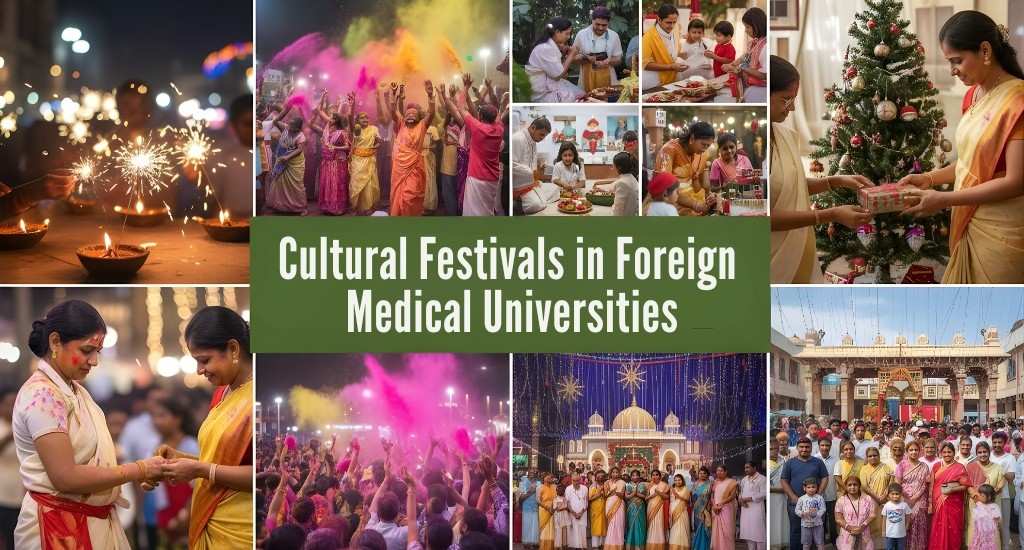
Walk into a foreign medical university, and you will understand that the learning is not only in the books—it is in the corridors. Pursuing a medical education abroad is an experience that gives you a special “Melting Pot” where the students from New Delhi and London share a common microscope. This cultural fusion is not only entertaining; it is also a learning experience.
While you are exchanging your traditional recipes or learning the greetings in five different languages, you are learning the cultural adaptability that is required of a global doctor. Participating in vibrant cultural festivals in foreign medical universities for Indian students 2026 is a vital way for aspiring doctors to maintain their heritage while building a sense of community far from home.
The Heart of Culture: Art, Dance, and Music
The stage comes alive as the lab coats come off. The auditoriums transform into a global stage through traditional showcases. These events are the heart of international medical schools. They reflect the heritage that each student brings, whether it’s the detailed beauty of a classical fan dance or the rhythm of a Bhangra show. The glow of hand-woven silk, the sound of traditional drums, and the galleries filled with student artwork create a vibrant display. These showcases offer more than just entertainment; they highlight the respect we earn. While we study the same anatomy, our rhythms are wonderfully unique.
The Global Kitchen: A Passport on a Plate
If music is the pulse of the festival, then the food vendors are its soul. The “Global Kitchen” turns the campus into a vibrant international marketplace where the smell of Ukrainian Borscht blends with the fragrance of Indian Biryani and the taste of Philippine Adobo. For medical students away from home, the food vendors provide a real passport to comfort. For others, it is a food adventure—a chance to experience authentic cuisine lovingly prepared by their very own peers. Sharing a meal is the quickest way to break the ice, and the best way to learn about a culture is through its kitchen.
Outside the Lecture Theatre: Networking and Faculty
In foreign medical universities, cultural festivals act as a connecting link between the lecture theatre and the students. These festivals provide a unique platform for Faculty Involvement, where the faculty members trade their lab coats for traditional clothing. Witnessing a Dean enjoying a performance by students or a Professor having lunch at a food stall in the festival is what makes the experience more human.
This is where the students get to network and develop a relationship that might result in research or career advice.
It is a definite sign that the journey to becoming a physician is a group goal.
The Balancing Act: Stethoscope, Syllabus, and Celebrations
One of the most frequent queries asked by prospective students when they view pictures of colorful cultural events is, “How do they manage to fit it in?” It is a legitimate question. Medical school is famous for its never-ending schedule, comprehensive curriculum, and challenging exams. However, the secret to succeeding in a foreign medical school is to work smarter and know when to put down the anatomy textbook rather than just working harder.
- The Myth of the 24/7 Student
There is a common misconception that to be a successful medical student, you must sacrifice every waking hour to the library. In reality, burnout is the greatest enemy of a future doctor. Cultural festivals act as a vital “mental reset.” Engaging in dance rehearsals, organizing a food stall, or simply attending a showcase provides a necessary dopamine boost that can actually increase cognitive function when you return to your books. It’s not “lost time”; it’s an investment in your mental well-being.
- Skills That Don’t Come from Textbooks
Managing a festival booth or choreographing a group performance requires high-level time management and leadership. These are the same “soft skills” required in a fast-paced hospital ward. Students learn to coordinate with diverse teams, manage small budgets, and work under deadlines—all while keeping up with their clinical rotations. When you see a student balancing a tray of traditional food and a heavy pathology textbook, you are seeing a professional in training who knows how to prioritize and delegate.
- Establishing a Support Network
Study abroad can be a lonely experience, particularly during intense exam periods. The “Med School Balance” is more easily sustained when a strong support network is in place. Festivals are what hold the support network together. The people you are staying up late with, dancing a traditional dance, are the same people who will comprise your study group for the USMLE or PLAB exams. This support network provides a safety net, so that when the academic demands reach their peak, you have people to fall back on.
- Finding Your Rhythm
The balance is ultimately one of integration, rather than separation. By engaging with campus life, students can build the strength necessary to sustain a medical career that spans a lifetime.
They come to realize that while the stethoscope is a symbol of their chosen profession, their culture and community are symbols of their identity. This balance between the two not only makes you a better student but a more well-rounded physician.
Education Orbit Counseling & Link
With over 5 years of local expertise, direct partnerships with the best Russian colleges, and a proven track record of placing over 2,000 students, Education Orbit Counseling & Link provides unparalleled support and guidance to ensure students’ success in studying MBBS abroad. As direct contractors with several reputed foreign colleges, we streamline the admission procedure. Call today.