

Introduction
Campus Life & Residential Amenities
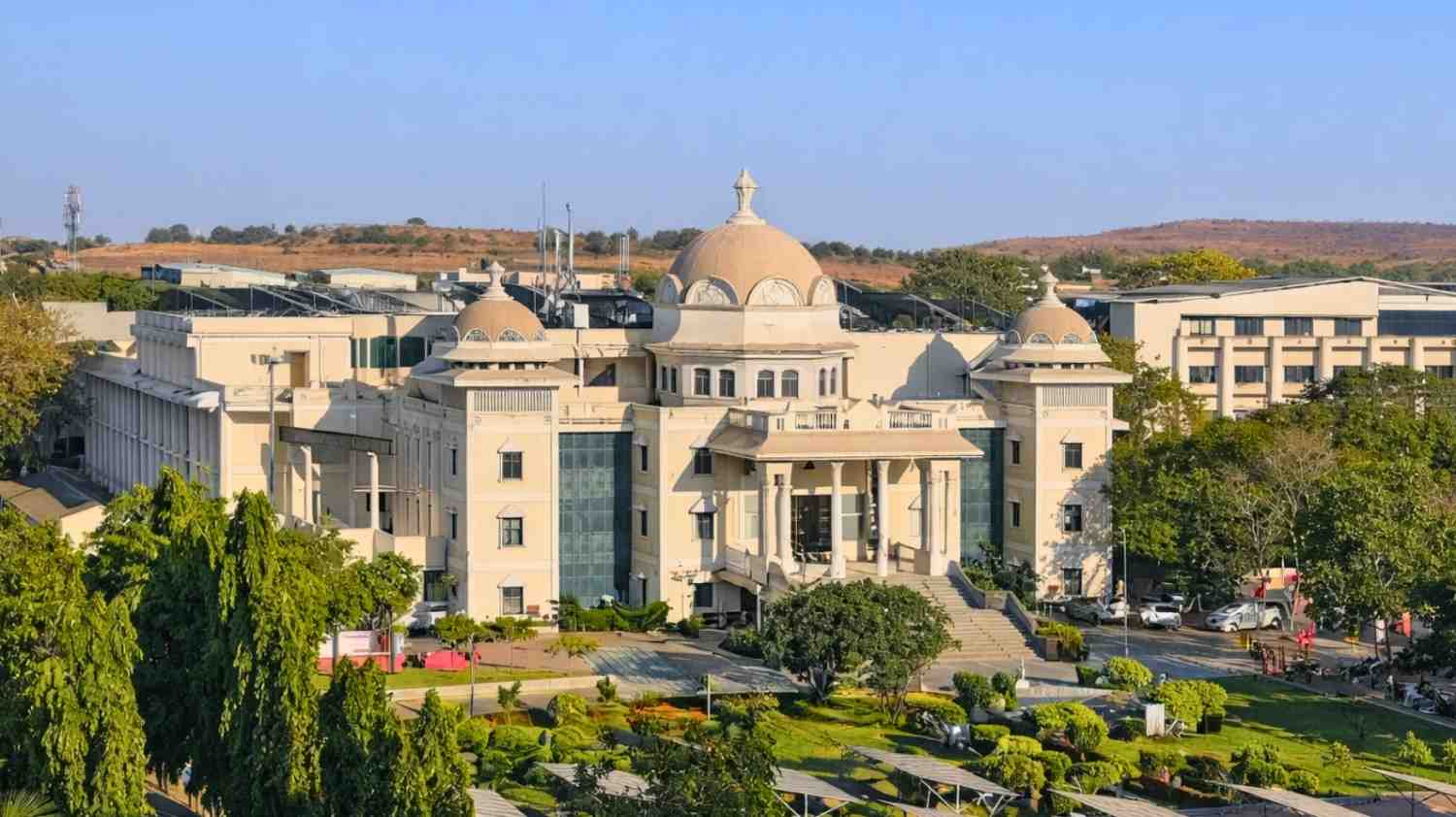
- Recreation & Wellbeing: students will have access to the sports complex, a swimming pool, a state-of-the-art gym and lastly to a Cognitive Health Centre which focuses on the mental health of the student population.
- Convenience: the campus is designed to be completely self-sufficient in terms of having banks/ATMs, postal services, food courts with a variety of different food options, shopping and temples on campus.
Academic Excellence
- Ranked as the 20th best College of Medicine in India
- Rated as the 36th best College of Dentistry in India
- Ranked as the 49th best University in India
- Ranked as the 84th best Overall University in India
- Ranked Top 100 in Times Impact Rankings 2021 for SDG 3 and SDG 5
- Ranked 5th out of 80+ Universities nationally for Ayurveda by ICARE
Academic Programs
The main focus of this university is the huge health and medical sciences division. There are three main colleges in this division – the Jawaharlal Nehru Medical College, which offers the MBBS and many MD/MS specialities, the Sharad Pawar Dental College, which offers a BDS and MDS, and finally the Mahatma Gandhi Ayurved College. There are numerous other programs offered here, such as Physiotherapy, Nursing, Pharmacy, as well as a highly specified School of Allied Health Sciences that grants both undergraduate and postgraduate degrees in fields such as Medical Radiology, Dialysis Therapy, and Cardiovascular Technology. For all students studying both medical/engineering and management courses at Datta Meghe Institute to receive a current Competency-based education, the Datta Meghe Institute syllabus has been extremely carefully constructed to meet the requirements set out by the National Medical Commission (NMC) and the All India Council for Technical Education (AICTE).
- Faculty Highlights
- The Faculty Members Have Prestigious Academic Backgrounds – Most educators in the Faculty of Engineering (FEAT) and Management programs graduated from distinguished universities such as the IITs and NITs.
- Most Members Are Also Researchers—Most of the FEAT and Management faculties possess PhD degrees and supervise many PhD students participating in the university’s extensive PhD research program.
- Collaboration Across Disciplines—With BGU’s strong focus on “Techno-Health,” it is common to observe engineering faculty collaborating with clinical medical faculty in conducting biomedical research.
Building and Facilities
- The Clinical Powerhouse—The Acharya Vinoba Bhave Rural Hospital (AVBRH) is located at the center of the campus and is a 1,500+ bed, multiple specialty teaching hospital equipped with 25 modular operating rooms, robotic surgery capability, and state-of-the-art oncology centres, providing significant exposure to students through clinical exposure.
- Across Multiple Disciplines (e.g., Engineering): Anukruti Simulation Centre—A state-of-the-art simulation centre with high-fidelity mannequins and virtual dissection studios to allow students to learn surgical techniques without risk.
- Digital Museums—Integrated learning centres—”Jigyasa” and “Swadhyay,” where tools and life-size replicas are stored using QR codes for self-study.
- Academic Centre—The BGU Academic Centre consists of modern air-conditioned classrooms and a 5,500 sq. foot Central Library, allowing for more than 1,200 readers to have digital access 24 hours a day.
- Accreditation & Global Recognition
- NAAC Grade: Accredited with an A++ Grade (CGPA of 3.78/4), which is the highest amongst health sciences universities in the country.
- Times Higher Education (THE) 2026: Placed in the 1001–1200 band globally and ranked 44th nationally within the THE framework.
- QS World Rankings: Ranked in the 651–700 band in the “Asia” category and acknowledged for its high employability and faculty quality.
Student Life
Fees Structure
- One-time University Fees: ₹1,00,000 – ₹1,50,000 (Enrollment & Eligibility).
- Annual Co-curricular/Amenity Fee: ₹1,25,000.
- Caution Deposit: Typically, a refundable deposit of ₹2,00,000 at the time of admission.
- Hostel & Mess: Ranges from ₹2.05 Lakhs (Standard Triple Sharing AC) up to ₹4.22 Lakhs (Premium Single AC), with mess charges usually included.
Criteria for Eligibility
- Educational Qualification: Candidates should have graduated from a recognized school with the following: High School Diploma or equivalent (Class X/XII) from CBSE, ICSE or State Board.
- Subjects Required: Candidates must have completed class 10 and 12 education in the subjects of English, Physics, Chemistry & Biology (PCB).
- Must be accepted on the basis of passing an NEET-UG test (NEET-UG is required to complete in order to gain admission into an Indian M.B.B.S School).
- Minimum Aggregate Scores required in PCB are:
- General Category – 50%
- PWD Category – 45%
- SC/OBC/ST Categories – 40%
- Minimum Age – 17 years old as of December 31 of the enrollment year. No Maximum Age Limit for Admissions.
Application Process
- Apply for the NEET-UG exam (typically February–March).
- You must score above the qualifying percentile (50th for General, 40th for SC/ST/OBC).
- Download your rank card once the results are out (typically June).
Required Documents
- NEET-UG Admit Card & Scorecard
- Provisional Allotment Letter (from MCC)
- Class 10th & 12th Marksheets and Passing Certificates
- Transfer Certificate (TC) and Migration Certificate
- Nationality/Domicile Certificate
- Aadhaar Card
- Medical Fitness Certificate
- 8–10 Passport-size photographs (same as used in NEET application)
- If applicable: Caste/Caste Validity Certificate or Gap Certificate
In Conclusion
DMIHER maintains its standing as a premier medical school by fusing cutting-edge facilities with a demanding competency-based curriculum, forming the next generation of globally relevant healthcare professionals.