

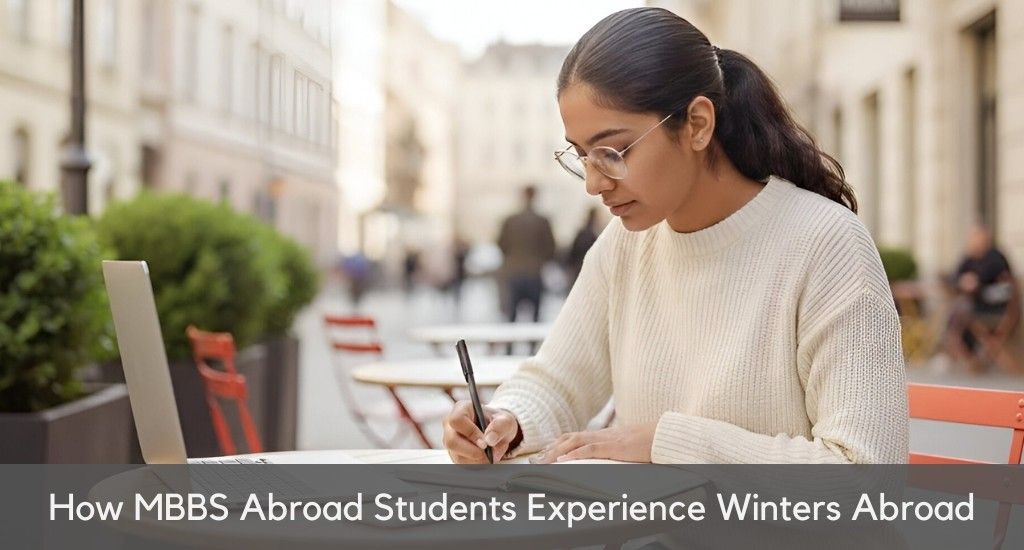
For many Indian medical students, the dream of pursuing an MBBS from Russia, Kyrgyzstan, Georgia, or Kazakhstan is finally a reality. However, this reality check can be a shock to the system with the first winter experience. When you are accustomed to tropical weather where “winter” means wearing a light sweater, -20 degrees can be a real shock to the system and the soul.
The winter experience abroad is not just about the snow-covered campuses; it is about resilience, health, and adaptability. Here is an in-depth look at how Mbbs abroad students experience the long, cold months and how you can make the “harsh” winter a memorable part of your medical journey. Many aspiring doctors are currently researching how MBBS abroad students experience winters abroad for Indian students 2026 to prepare for the extreme climate change experienced in Russia and Georgia.
MBBS Abroad Students Experience: The Art of “Armor” – Dressing for Survival in Winter
In countries where the temperature drops significantly, clothing is no longer a fashion choice—it is life support. Students quickly learn the “Layering Principle” to manage the drastic difference between the freezing outdoors and the centrally heated, often toasty, indoors.
- The Base Layer: High-quality thermal wear (moisture-wicking) is essential. It keeps body heat trapped without making you sweaty.
- The Insulation: Sweaters, hoodies, or fleece jackets go over the thermals.
- The Outer Shell: A heavy-duty, waterproof parka or down jacket with a fur-lined hood is a non-negotiable investment.
- The Extremities: Most body heat is lost through the head and feet. Thick woolen beanies, waterproof insulated boots with a good grip (to avoid slipping on “black ice”), and thermal socks become daily staples.
Pro Tip: Don’t purchase all your winter clothing in India. Although you should pack some basic thermals, you should purchase your heavy-duty jackets and boots when you reach your destination. This is because local brands are specifically designed for that region’s extreme cold.
Dealing with the "Winter Blues": Mental Health & SAD
- Maximize Daylight: They sit near windows during lectures and take short walks whenever the sun comes out.
- Stay Social: It’s easy to just stay in your dorm room, but that’s the last thing you want to do. Getting “potluck” dinners with classmates or study groups is a great way to keep your spirits up.
- Vitamin D: When you don’t get enough sunlight, you don’t get enough Vitamin D. Most physicians will tell you to take supplements during the winter months.
- The Medical Student’s Diet: Warming from Within
Academic Life in the Cold
- The “Penguin Walk”: You will learn to walk with your feet flat on the ground and slightly bent forward to prevent slipping on the hidden ice.
- Device Care: The phone and laptop batteries will drain in minutes in extreme cold. Students learn to carry their devices in inner pockets, close to their body warmth, to prevent them from dying on the way to a presentation.
- Hospital Etiquette: Most universities and hospitals have a “cloakroom” (Wardrobe) system. You cannot enter a classroom or hospital ward wearing your heavy winter coat. You’ll learn the drill of removing layers quickly to look professional in your white coat.
Adjusting to Shorter Days and Snowy Surroundings
Another major aspect of the MBBS abroad students experience in winter is adjusting to shorter daylight hours. In many Eastern European countries, the sun may set as early as 4 PM, which can feel unusual for students coming from India.
Snow-covered campuses, frozen rivers, and white landscapes may initially look beautiful and exciting. However, students soon realize that daily life requires extra planning. Walking to classes, visiting hospitals for clinical training, or even going grocery shopping requires preparation due to icy roads and cold winds.
Despite the challenges, many students eventually begin to enjoy the winter scenery, snowfall, and festive atmosphere in cities.
Skin and Health Care: The Dryness Battle
- High-Occlusive Moisturizers: Standard lotions won’t cut it; you need thick creams or petroleum-based products.
- Lip Balm: A constant companion in every lab coat pocket.
- Humidifiers: Placing a bowl of water near the heater or using a small plug-in humidifier in your dorm room prevents your throat and skin from drying out overnight.
In Conclusion
As an Mbbs abroad students experience student, having a foreign winter is a growing-up experience. It will make you tough and hardy, and this will benefit you in your later life as a medical professional. You will not only live through the winter but also flourish if you dress well, eat well, and look after your mental health.
EOCL India
Among the leading consultancies that help Indian students study Mbbs abroad students experienc is Education Orbit Counseling & Link. They are aware of the list of NMC-approved universities in Kazakhstan and Russia and offer comprehensive assistance to ensure a smooth international medical education journey. Make a call today.