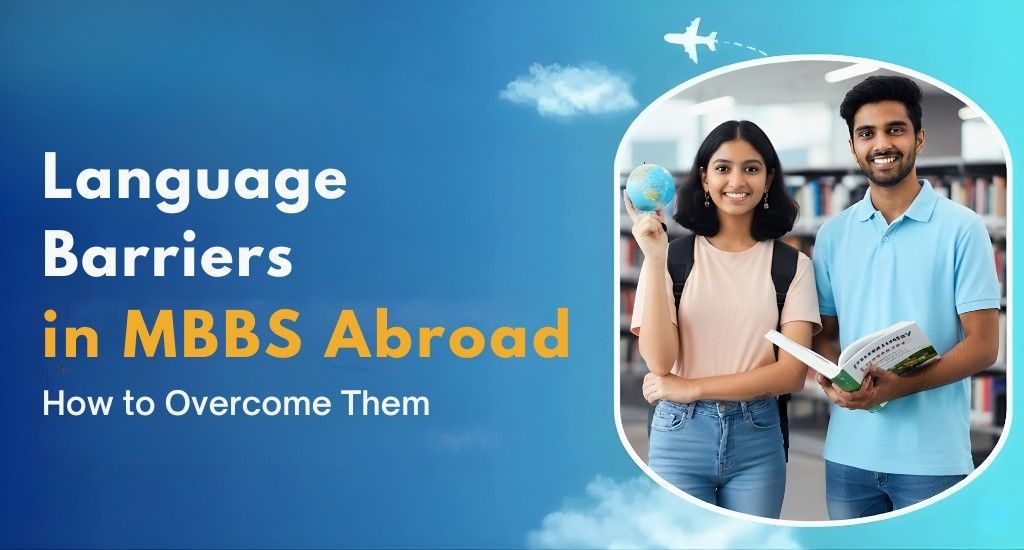
Language Barriers in MBBS Abroad – How to Overcome Them

Language Barriers in MBBS Abroad - How to Overcome Them
It’s becoming increasingly common to pursue your MBBS (medical degree) abroad. Why? Because students want to experience different places, use modern, cutting-edge facilities, and get a world-class education.
The main ones are dealing with a new language and fitting into a new culture. These things seriously affect how well a student does, both in their studies and in their personal life.
If you’re thinking about studying medicine abroad, you absolutely must be prepared to learn the local language (or the language of instruction) and feel comfortable in the new culture. Your success truly depends on how well you can adapt. Providing crucial insights for prospective medical students preparing for international studies, language barriers in MBBS abroad – how to overcome them for Indian students 2026 is essential.

The Factors Influencing Students' Choices to Study MBBS Abroad

It’s important to know why hundreds of students decide to study medicine overseas every year before we talk about the difficulties. The main reasons are simple: private medical schools in places like the US and India are just too expensive compared to most other countries. Plus, degrees from top international universities are often recognized by major global groups like the World Health Organization (WHO) and the National Medical Commission (NMC). Another big draw is that most foreign universities provide hands-on experience with labs, hospitals, and clinical rotations.

Language and Culture Challenges for MBBS Students

When you go abroad to study medicine (MBBS), you’re likely to run into challenges with language and culture shock. Here are the most common hurdles international students face:

The biggest challenge is often the language. Although most universities teach in English, students often struggle to understand the local language or dialects once they start their clinical internships. Additionally, simple tasks like shopping or using public transportation in a non-English speaking country can become challenging in daily life outside of school.

It’s common to experience culture shock when pursuing your medical degree (MBBS) overseas. Adjusting to new eating and lifestyle habits can be challenging. This is especially true if you are a vegetarian or adhere to strict dietary regulations because of your religion. In conclusion, traveling overseas is a significant change, and it’s acceptable to be taken aback by new traditions, whether they have to do with greetings or cuisine. Just remember to be respectful and give yourself time to adjust.
Every school teaches a little differently. Some colleges focus more on book learning (theory), while others give you a lot more hands-on practice. It’s also essential to understand how you’ll be graded. The standards for grading your tests and assignments might be completely unfamiliar to you. To do well in your course and meet your college’s requirements, you need to quickly learn the ropes of these new academic methods.
This simply means that people’s lifestyles, behaviors, and interactions may differ greatly from your own. For instance, you may observe significant disparities in religious customs, gender roles, or even how people greet one another. The best way to deal with this is to be conscious of these distinctions and make every effort to show consideration and respect for the local traditions.

Moving to a New Place? You've got this!

Moving to a new place can make you feel a little overwhelmed, especially if the locals speak a different language or have different customs. But you’ll get along just fine if you put in a little work, plan, and have an open mind!
  • Learn the Lingo: Start by using fun language apps like Duolingo, Babbel, or Memrise to grab the basics. It’ll make a huge difference!
  • Make Friends: Team up with your classmates—both local and international ones. You can learn so much from each other and help each other out!
  • Dive into the Culture: Check out clubs or cultural events at your school to learn about local traditions. And definitely go to those local festivals! They’re a fantastic way to meet people and help you feel less homesick. Don’t be shy!
  • Know Your School: Most colleges offer orientation sessions where they explain how grading works, what your program structure is, and all the support services available to you.
  • Get Guidance: If you need help figuring out your courses or study techniques, your academic advisor is there to guide you through any syllabus changes or learning adjustments.
You can easily bridge the gap and really enjoy your new experience with just a few simple steps!
Remember that your college likely has support services just for foreign students and staff who can help with your mental health. A great way to build your own network is by joining clubs—like those focused on different cultures or regions. Also, quick daily video chats with people back home can make emotional stress much easier to handle.
If you decide to pursue MBBS overseas, you must first learn about the culture and language of the country you’re going to. These factors will directly affect how well you can make friends, complete your practical medical training, and do well academically during the program.

Education Orbit Counseling & Link

Welcome to Education Orbit Counseling & Link, your exclusive partner in studying a best-in-class MBBS education abroad. At Education Orbit Counseling & Link, we ease the procedure of studying MBBS abroad and make it accessible for all aspiring students. Call us today.

Share this :
WhatsApp
LinkedIn
Facebook

Leave a Reply

Your email address will not be published. Required fields are marked *