
Kazakhstan

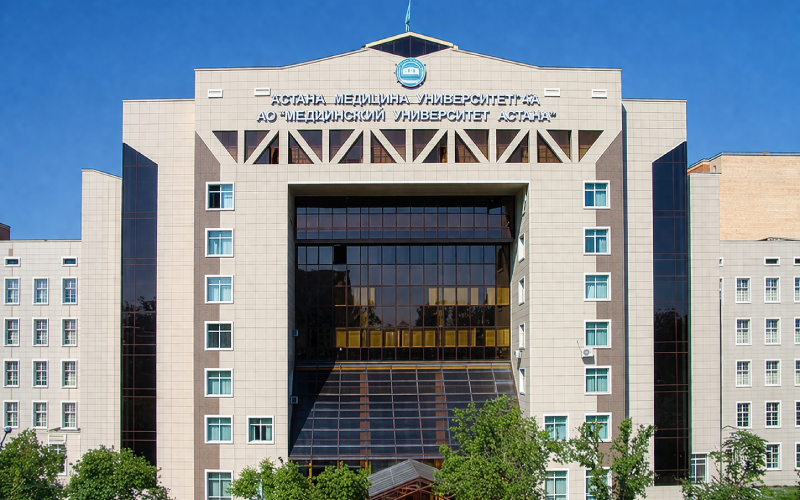
Astana Medical University

Astana Medical University is one of Kazakhstan’s leading and growing medical schools. Astana Medical University provides an outstanding opportunity for those who seek to be successful in the practice of medicine.
Astana Medical University (AMU)

Introduction

In 1964, the Medical School of Astana started when the Praesidium of the Supreme Soviet of the Kazakh SSR announced an order to effect the establishment of a medical institute in Tselinograd. The new medical institute’s first name was Tselinograd State Medical Institute, and it was initiated because of the increasing demand for qualified medical personnel in the area where it was located. The Medical School was organised and managed by A. Rakhishev, the Academic Coordinator of the new medical institution.
Many instructors from Almaty arrived in October 1964 to begin teaching and establish the basis for the academic development of the Medical Institute, thus starting a tradition of educating qualified professionals.
For many years afterwards, the Medical School continued to flourish, gaining a reputation for training well-qualified healthcare providers.

History

In 1997, the Academy became an accredited institution after receiving Academy status from the Sokolovskoe Akmolinsk Province. This recognition demonstrated the Academy’s ongoing success and the enhancement of its efforts to expand its programs. The Academy became a full-fledged University in 2009, taking the new name of Astana Medical University and becoming the first joint-stock company in Kazakhstan to offer a Medical School. Furthermore, with the new designation came a variety of new program specializations, a new method for transferring credit between colleges (credit transfer), as well as the implementation of a systematic, 3-level Educational System; this includes bachelor’s, master’s, and PhD programs and increasing opportunities for students to pursue higher education.

As of July 2010, all students enrolled at the Academy and associated with the Ministry of Health of the Republic of Kazakhstan will continue to receive the highest quality of education and be trained to provide the best quality of health care to their communities throughout Kazakhstan. Today, the Academy is considered one of the largest and best Universities that offers a full Medical Program across the country.

University Recognition

For Indian medical students, Astana Medical University is also recognized as an institution by the National Medical Commission of India; this is the governing body that regulates medical education and practice in India. As a result, Indian medical students who graduate from Astana Medical University are permitted to appear for the Foreign Medical Graduate Examination, which is required for all foreign medical graduates who want to practice medicine within India.
Additionally, UNESCO has recognized Astana Medical University, and Astana Medical University is also recognized by medical councils in many countries. Therefore, graduates from the University are assured they will have the opportunity to practice medicine worldwide or pursue additional specialization in other countries. Further evidence of the quality of Astana Medical University is that it functions as an affiliated institution within the Kazakhstan Ministry of Education and Science, which ensures that Astana Medical University operates in accordance with national educational standards.

Academic Programs & Structure

Astana Medical University provides a comprehensive Doctor of Medicine degree, equal to an MBBS degree, and taught (entirely) in English. With an English-language degree for all international students, barriers can be removed, and the emphasis can be placed on understanding medicine instead of struggling with the language. The entire program takes six years, with five years of theoretical/preclinical education followed by one year of compulsory clinical internship.
All required medical courses (i.e., Anatomy, Physiology, Biochemistry, Pharmacology, Gynecology, and Community Medicine) are included in the curriculum so that the student is prepared to provide care and operate within these disciplines with both theoretical and practical clinical skill sets.

Faculty and Teaching Excellence

A prestigious academic team defines the quality of an educational institution, and Astana Medical University certainly has that. Presently, the university has 873 faculty members, among whom 112 hold doctorate degrees in medicine. These professors possess extensive experience in research as well as clinical practice, allowing them to act as both educators and mentors to their students. Additionally, they are also leading researchers within the medical community and will continue to be so through their contributions toward the development of medical knowledge.
Additionally, the introduction of credit-based learning technologies has provided an opportunity for students to take advantage of flexible, personalised education paths based on credit transfer. Furthermore, smaller class sizes enable professors to dedicate additional time and attention to their students.

As part of the university’s mission to provide students with valuable clinical experience, the university’s clinical base includes some of the largest national and regional-level medical institutions operated under the National Medical Holding. Through these affiliations, students have access to the latest, most advanced medical technology and a variety of clinical presentations. Faculty members teaching clinical topics are practicing

physicians in their fields with extensive clinical experience that allows them to integrate real-life scenarios into their teaching and demonstrate how the knowledge acquired in class is applicable to patient care.

Modern Infrastructure and Facilities

Astana Medical University has invested heavily in a high-quality learning micro-environment offering state-of-the-art academic facilities and resources for students. The university has a main building structure surrounded by many larger buildings that supply centralized heating and cooling, allowing the students to have comfortable study environments throughout the entire school year. One of the main outstanding resources available to students is a medical library that is considered the largest medical library in Kazakhstan. Print materials such as textbooks and journals are available for students, but beyond print materials, students also have access to electronic resources such as databases.

Classroom technology is utilized for seamless delivery of educational materials, with each classroom equipped with cutting-edge projectors, interactive whiteboards, and various types of video/audio technology. With the use of these tools, instructors can demonstrate and effectively use multiple means of education delivery. The university has a large number of highly specialized research labs where students receive extensive hands-on training using cutting-edge devices and processes for diagnosing and treating patients. The university also frequently updates its labs with newly developed safety equipment, instrumentation, and technology, ensuring that students receive education in accordance with current industry standards.
Another way that the university provides students with clinical skill training is through its use of simulation centers. Students gain the assurance and competency in their ability to perform many clinical procedures before they interact with any real patients through practice with mannequins and models of the human body and its various physiological responses.

Fee Structure and Affordability

Annual Tuition Fees Breakdown:
Year Tuition Fee (USD) Tuition Fee (INR) Hostel Fee (INR) Total Annual Cost (INR)
1st Year $5,600 ₹5,04,000 ₹90,000 ₹594,000
2nd Year $5,600 ₹5,04,000 ₹70,000 ₹574,000
3rd Year $5,600 ₹5,04,000 ₹70,000 ₹574,000
4th Year $5,600 ₹5,04,000 ₹70,000 ₹574,000
5th Year $5,600 ₹5,04,000 ₹70,000 ₹574,000
Internship (6th Year) $5,600 ₹5,04,000 ₹70,000 ₹574,000
Total (6 Years) $33,600 ₹3,024,000 ₹440,000 ₹3,464,000

Clinical Training & Exposure

The clinical education at Astana Medical University is one of its greatest strengths. By partnering with some of the top hospitals and healthcare organizations in Kazakhstan, the university gives students a variety of clinical rotation experiences. Students spend the entire time working with a variety of other healthcare practitioners and under the supervision of licensed physicians. As a result, they learn how to apply their classroom-based educational training to actual patient care situations.
The one-year mandatory internship provides students with in-depth hands-on training through their experience working as junior doctors under the supervision of a licensed physician. This program prepares students to work as independent practitioners after they complete their education at the university. Students learn how to evaluate patients for disease and formulate a treatment plan, as well as how to communicate with the patient and document their care.
Additionally, the university has additional clinical bases, which include specialised centres for many different speciality areas. Therefore, students will gain a wide breadth of societal views on a number of different diseases and their respective treatment options. Students will participate in patient rounds; witness surgical procedures, help with the provision of care for patients, and gradually take on greater responsibility as they progress through their programs. Ultimately, by the time students graduate, they will have developed the skills and confidence to practice medicine independently.

EOCL India

EOCL India aims to deliver complete support to all students aspiring to pursue Medicine in Russia and across various countries while informing them about the opportunities available for pursuing MBBS in Russia.

Contact Details:

Website: https://eoclindia.com

Phone: 9811696553

Email: support@eoclindia.com

Table of Contents