

Different Types of Recognition
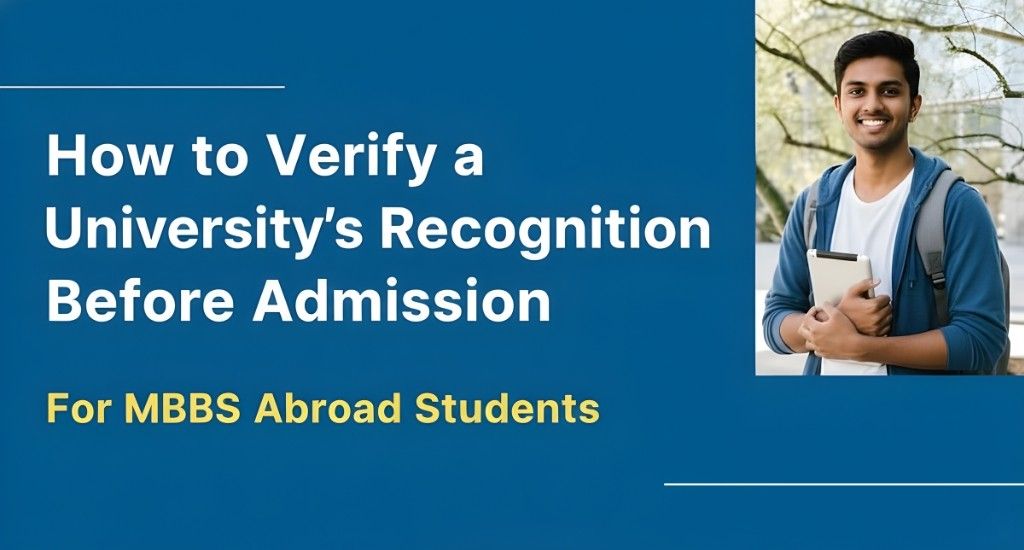
To verify the university’s recognition, you need to understand some steps & types of verification. When referring to a university’s recognition as local or national, it indicates that this institution has the ability to give out degrees in its own country. Professional means that the degree obtained is recognized by certain organizations that can allow this individual to be able to work and practice medicine. Lastly, International Recognition signifies that this degree can be recognized by other countries and enables an individual to either practice or further their education in those countries. On the other hand, for students from India, the only thing that really matters is the recognition given by the National Medical Commission (NMC), despite any other recognitions received from the institution.
- Step 1: The NMC Official Website
One of the most important things that you can do to check whether the NMC has recognized an institution is to go to its website. The NMC maintains a list of foreign medical education institutions whose degrees are accepted in India.
On the NMC’s website, there is a section dedicated to Recognized Foreign Medical Educational Institutions or Foreign Medical Graduates, and there will usually be a list of recognized Institutions along with country and year of accreditation. Make sure to check whether the name matches exactly because many fraudulent institutions will use the same names or close enough to confuse prospective students.
- Step 2: Verify Against the World Directory of Medical Schools
The World Directory of Medical Schools (WDOMS) is also an excellent way to verify that a university has been recognized as an educational institution by an international organization. The WDOMS database includes all medical schools around the globe, including their recognized status, accreditation status, and contacts for students researching medical schools.
Look up your university on WDOMS and see if it has been updated. The WDOMS directory shows whether your medical school is actively operating, its accredited status, and contact details. Cross-checking with the WDOMS directory provides additional evidence that a particular university is an authorized medical school.
- Step 3: Verify With the Indian Embassy
To obtain the most complete and comprehensive information about the recognition and legitimacy of your university, contact the Indian Embassy (or Consulate) located in the same country as your university. Representatives from the Embassy will be able to provide you with information on all recognized educational institutions, including whether your university has been authorized for acceptance by Indian citizens.
The education department of the Indian Embassy will typically provide lists of universities that have been authorized by them, as well as potential fraudulent universities known to them. Additionally, they will have information on the overall reputation of your university among other students from India who are currently studying there.
- Step 4: Verify WHO Listing
A medical school’s recognition through the World Health Organization’s (WHO) World Directory of Foreign Medical Schools can also be confirmed on its listing. It is important to note that being listed does not confirm NMC recognition; however, this inclusion indicates a minimum level of legitimacy.
- Step 5: The WHO directory
- Step 6: Contact the University Directly
To check the Recognition for a university, be sure to contact the international admissions office of the school. You should also consider obtaining official documentation from the university on their Recognition Status, such as the National Medical Commission’s (NMC) Recognition Letter, a National Accreditation Certificate, and confirmation of World Health Organization (WHO) listing with the university. The most reputable universities will have all these documents readily available to provide prospective students so they may confirm the university’s credentials.
- Step 7: Connect With Current Students
Connecting with Current Students and Alumni is the most effective way to validate the Recognition and Reputation of a university. Students attending a university who are from your city or state can be located through social media groups, educational forums or networks of educational consultants. The experiences these students have had provide the best insight into the University and cannot be found in any official documents.
Conclusion
When verifying a university, you should utilize a systematic approach and confirm its status through several official references. You should never allow anyone to pressure you to skip steps in the verification process or accept incomplete information. Your medical career will depend on whether or not your degree was awarded by a legitimate institution, making thorough verification one of the most significant investments in your future development.
EOCL India
Based on your careful verification of the university you select, as well as the guidance of reliable resources such as EOCL India, you will be able to select an accredited school and be well on your way to having a successful medical career. EOCL India focuses on the most important things: safety, trust, and transparency, which make EOCL India one of the best companies in the country. Contact us for your safest and best university admission.