A Day in the Life of an MBBS Student Abroad

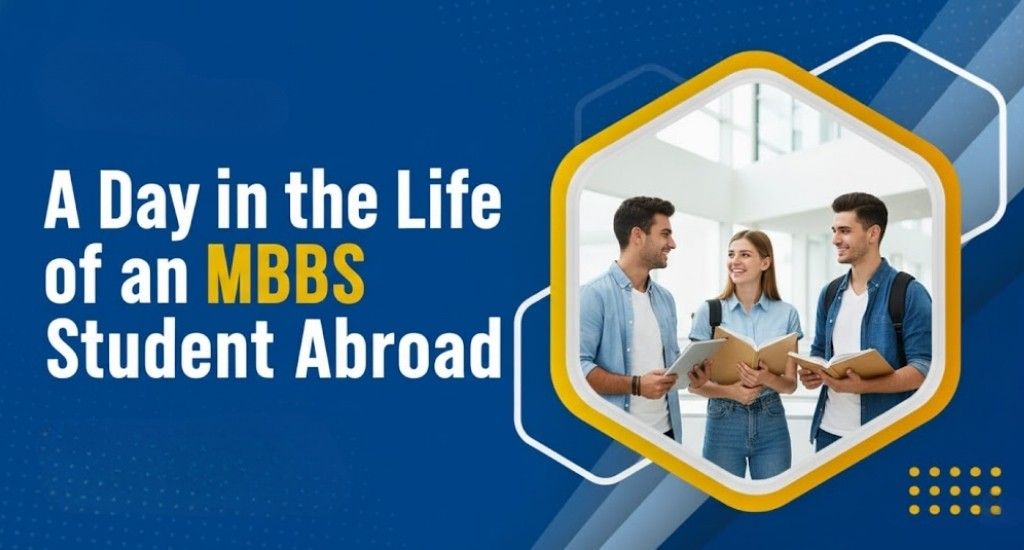
A Day in the Life of an MBBS Student Abroad
Studying for your medical degree (MBBS) abroad is a life-changer; it impacts more than just your studies. Every year, hundreds of Indian students decide to study medicine overseas. They do this because they can get cheaper tuition, they get to experience a new country, and they receive a really good education. From an early start fueled by strong coffee to navigating complex medical terminologies in a non-native tongue, a day in the life of an MBBS student abroad 2026 is a relentless pursuit of knowledge balanced precariously with the excitement and challenges of cultural immersion.

Why should you consider an MBBS degree?

Well, the truth is, getting into an Indian medical school is incredibly competitive. The NEET exam is extremely tough! Medical school places are tough to get—thousands of students fight for just a handful of spots annually.

Getting into an MBBS program (medical school) is super tough here because there are lots of people applying, but very few spots. That’s why more and more students are looking abroad. It’s a great option because you can get a top-quality education that costs less money. Countries like Kazakhstan, Georgia, the Philippines, and Russia have become popular choices. They provide high-quality medical degrees, instruct in English, and the National Medical Commission (NMC) recognizes their degrees. These colleges also offer Indian cuisine, improved hostel facilities, and a secure learning environment. Pursuing an MBBS abroad involves more than just study materials and coursework. It combines clinical training, hospital visits, and classroom instruction. In 2026, an MBBS study abroad program aims to give participants a solid grounding in both knowledge and practical skills.

If you’re an MBBS abroad student, you’ll probably start your day early. Your classes—things like anatomy (how the body is put together), physiology (how it works), and biochemistry (the chemistry of life)—will kick off in the morning. Since most colleges use English, you’ll hear it spoken most of the time.
After the morning lectures, you head straight to the labs. This is where the real, hands-on learning happens! You’ll be dissecting (taking things apart to see how they work), looking closely at things under a microscope, and learning to identify all the different body parts.
As you get into your second and third years, you move into clinical rotations. This means you’ll be working directly in the hospital, learning on the job. Once the day is done, your evenings are usually all about studying, reviewing your notes, and preparing for tests.
Students are continuously working on case studies and assignments based on real medical situations in order to make the connection between what they learn in class and the real world. In certain nations, such as China or Russia, students even enroll in language courses to improve their ability to communicate with hospital patients. Most colleges provide additional tutoring sessions to help students who are having trouble understanding a difficult subject.
The college library is a well-liked location for students who need to consult reference materials or are getting ready for big tests like the FMGE/NExT.
Being a medical student is about more than just studying! You’ll also get to make new friends and experience other cultures, which is a huge part of the experience. Students move into a completely new environment, where they can try different foods and meet people from all over the world. While it might feel a little strange initially, students quickly get comfortable with the local way of life, including the customs and food. Many even learn to cook for themselves in the shared kitchens.

Colleges organize enjoyable events to ensure that students aren’t just working. These consist of athletic events, cultural performances, talent contests, and get-togethers for international students. These are great opportunities to demonstrate your abilities and create some incredible, lifelong memories.

Starting, students might really miss home. But they can get comfortable emotionally by making friends, staying busy, and chatting daily with family back home using video calls.

Money Matters: Living Expenses and Budgeting

It takes some serious skill to manage your money well while you’re studying in a foreign country. You have to be a careful budgeter! In addition to tuition, students also have to cover other costs like housing, food, transportation, Wi-Fi, and other essentials.
Students who understand how to manage a monthly budget are better able to live comfortably without going overboard. With careful planning, enrolling in an MBBS program abroad can be hassle-free and reasonably priced. Being away from home means missing loved ones, meals, and festivities. The majority of Indian students find that adjusting to a new environment involves adjusting to new cuisine and missing home during holidays. However, as time goes on, students have several options to feel more at ease and maintain their family ties. Nearby eateries that serve Indian food or an Indian canteen are found at most colleges. The majority of students learn how to make basic Indian cuisine. Students use video calls, photo sharing, and messaging to communicate with their families on a daily basis. Most students enjoy trying new foods and learning about different cultures.

Selecting the Right Medical Universities Abroad

Selecting the right medical universities abroad for Indian students is a very significant step in the MBBS journey. The quality of education, accreditation of the degree, security, fees, and student support all depend on the applicant’s choice of college. Indian students should look for NMC-recognized universities that provide English-medium programs, good practical training, and strong student support systems.

Education Orbit Counseling & Link

Education Orbit Counseling & Link is an MBBS abroad consultancy owned by Mr Vipul Bhardwaj, a professional with a vast senior-level working experience in the industry. We are experts in MBBS admission abroad in Russia. We only deal with the colleges that are recognized by the global medical bodies. Call today.

Share this :
WhatsApp
LinkedIn
Facebook

Leave a Reply

Your email address will not be published. Required fields are marked *