A crucial but sometimes misrepresented component of this pathway is the mandatory rotational internship, which helps connect medical education to independent practice. For the many thousands of Indian citizens graduating from medical universities in Russia, Ukraine, China, the Philippines, Bangladesh, etc., in 2026, it has become even more essential to learn what the requirements, processes, and opportunities are for MBBS graduates studying abroad to do their intern year at an Indian hospital as the regulations regarding these internships change and update, and more options become available for graduated students.
The Internship Requirement
- Why It Matters
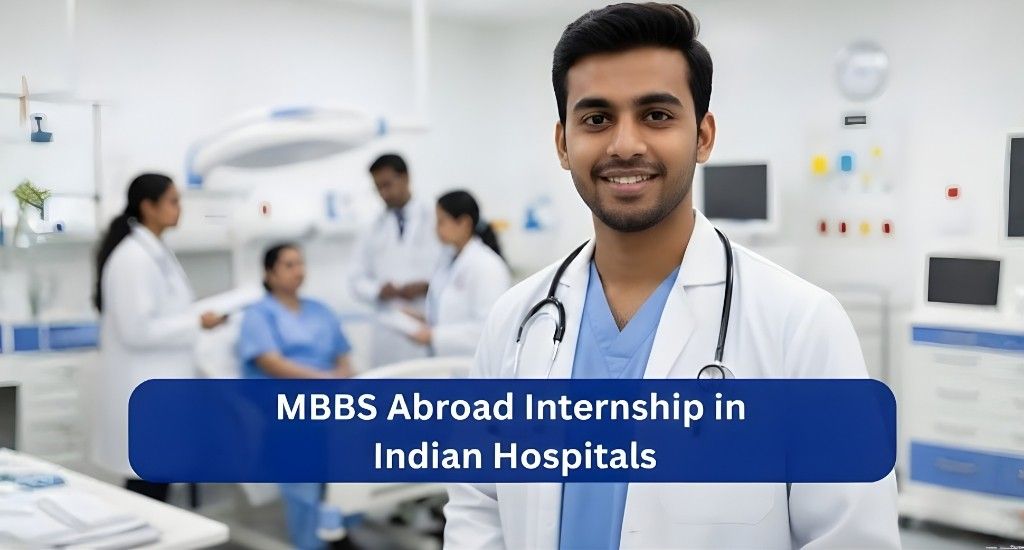
Before moving into the specifics of obtaining practical training during internships, it’s important to know why the program is designed and its goals. The compulsory rotating internship is the final phase of medical education before graduating—a supervised training experience in which medical degree earners use their education and clinical competence gained in school to treat patients for real under the supervision of physicians who have experience.
For international medical program graduates, this experience serves multiple purposes. The first goal is to provide the international medical service experience needed to understand the Indian healthcare system, population, diseases treated, and ways of practicing medicine, all of which differ considerably from what one experienced overseas.
The second goal is to create practical learning and competency development so that, at the end of this experience, the graduate will feel confident about their ability to independently practice medicine. While medical school teaches one the fundamentals, the transition into responsibly caring for a patient on one’s own requires a period of supervised practice, where one can make decisions, provide treatment, and manage complications with the guidance of an experienced physician when necessary.
Lastly, for many international medical program graduates, completing their internship in an Indian hospital that is part of their medical school experience will be the first major opportunity for them to experience an extended period of working in a country where they will eventually practice medicine, allowing them networking opportunities, knowledge of the employment market, and an understanding of institutional practices that will help them throughout their subsequent job search.
Current Framework: NMC Guidelines 2026
The National Medical Commission (NMC) is the highest regulating body in the country to regulate all aspects of medical education and practice, including arranging for the mandatory and structured internship for all foreign medical graduates (confirmed by the National Medical Commission Act of 2019).
- Understanding the current regulations is essential in planning an internship
The NMC requires every medical graduate, including graduates from outside of India, to complete a 12-month compulsory rotating internship at an approved medical institution, in several different departments, to gain a broad exposure to different specialties during the course of the internship.
- Typical structure of rotations includes (but is not necessarily limited to)
- Medicine: 2-3 months of caring for patients with medical problems.
- Surgery: 2-3 months of assisting in surgery and perioperative care.
- Obstetrics/Gynecology: 2 months of managing obstetrical patients throughout the pregnancy, delivery, and problems associated with gynecology.
- Pediatrics: 2 months of caring for pediatric patients/neonates.
- Orthopedics: 1 month of caring for patients with musculoskeletal disorders.
- ENT: 1 month of caring for patients with ear, nose, and throat problems (otolaryngology).
- Ophthalmology: 1 month of caring for patients with eye disorders. Community Medicine/
- Casualty/Anesthesiology: The remaining months will be divided among the three departments.
While many of the institutions may have slight variations in the rotation structure, the consistent theme is a broad range of exposure across all major medical specialties.
When Can an Internship Be Completed
An important question that Indian students will need to answer while pursuing MBBS abroad and doing internships in Indian hospitals in 2026 is the time at which internships must be completed: whether it can happen while they are completing their studies abroad or not until after their physician training program has ended.
The current NMC guidelines indicate that foreign graduates of medicine must complete the required rotating internship within 12 months after getting their MBBS degree; there is also a requirement that you pass the FMGE exam for eligibility to sit for your medical registration exam. In previous years, some residency programs allowed students to complete their residency abroad during the completion of their undergraduate degree.
Additional factors impact verification of internship training for the purposes of obtaining medical licensure in your home country. These considerations impact how the administrator at the State Medical Council verifies whether a student’s completion of an international internship qualifies and still conforms to NMC guidelines.
The following are some key considerations:
- Internships Completed Abroad
If you complete an internship with a supervising physician that is formally approved by the NMC, then you could potentially use that experience as an accepted means of fulfilling the continuing education mandate of the NMC after passing the FMGE.
Most students who have already passed the FMGE will complete their required rotations at an Indian hospital. Doing so will make it easier for both the student and the state to verify eligibility for future medical licensure.
- Verification is Critical
You should verify with the State Medical Council that the internship that you completed abroad qualifies for future licensure. Therefore, it is prudent to verify the internship requirement with the NMC as well.
Securing Internship Positions
For Indian students pursuing an MBBS abroad, obtaining an internship in an Indian hospital is one of the greatest difficulties for MBBS Abroad Graduates 2026. Whereas Indian-born graduates have the luxury of continuing their internship at their own institutions, graduates of medical schools outside India must proactively seek and solicit the few Indian hospitals willing to take on graduates of foreign schools.
Internship Opportunities in Indian Hospitals
There are three types of institutions qualified to provide internship opportunities for Foreign Medical Graduates (FMGs):
- Government Medical Colleges
These prestigious institutions provide FMGs with the most comprehensive and structured internship programs. Interns will receive hands-on supervised clinical experience on a wide range of conditions and will have the opportunity to work with patients from very diverse populations. However, each government medical college will receive a significantly higher number of internship applications than they have available positions; thus, acceptance is extremely competitive.
Furthermore, Government Medical Colleges will tend to give preference to graduates of their own college, followed by graduates of other Indian Medical Colleges, with FMGs competing for placement in the remaining few available positions.
- Private Medical Colleges
Many private medical colleges have available internship positions for FMGs and would therefore be an appropriate alternative for those seeking FMG positions in the United States. Although private medical colleges often tend to have more non-competitive opportunities, unfortunately, the quality of training at private medical colleges can vary significantly (i.e., excellent programs at one institution and very poor programs at another institution).
- District Hospitals and Tertiary Care Centers
Some state governments run district hospitals and specialty hospitals, which have intern programs. These places usually have real-life patient care needs and will often accept motivated interns. Although they may not have the same level of prestige as top medical colleges, they can provide an excellent hands-on clinical experience with a lot of responsibility for patient care under supervision.
- Corporations Chain of Hospitals
Some of the big private hospital chains offer intern programs that are structured (Apollo, Fortis, Max, Manipal, etc.). These hospitals generally provide modern facilities with standardized protocols and training structures; however, many corporate hospitals do not provide formal intern programs; therefore, opportunities for FMGs may vary.
- Rural Health Center
A rural health center is usually a small community-based hospital whose primary focus is providing community and public health services to its local communities (i.e., village/town). Intern opportunities are less common at these types of facilities but may be available for students interested in working in community medicine or in rural settings. These types of positions provide a unique experience in addressing public health issues and providing primary care to people in underserved areas.
Education Orbit Counselling and Link
Education Orbit Counselling and Link have experienced consultants who guide international medical graduates to apply and gain access to internship programs in India. They offer information about the types of hospitals that host interns and keep updated with current internship opportunities in each state and area of India. EOCL India assists with applications and registration with the relevant authorities for you to transition from being an international medical student to practicing as a physician in India.
If you need help or support when completing the process of transitioning to medical practice in India, please contact EOCL India (Education Orbit Counselling and Link)
.